
- 22 Nov 2026
Swallowing Difficulties: Don't Ignore the Warning Signs
Do you or a family member experience coughing or choking while eating or drinking?
Swallowing difficulties are not just a problem with eating. They may be a sign of a disorder that requires specialized assessment and diagnosis.
1. What Are Swallowing Difficulties?
Swallowing difficulties, also known as dysphagia, refer to difficulty moving food or liquids safely and effectively from the mouth to the stomach.
They may occur during chewing, when initiating swallowing, or as food passes through the pharynx and esophagus.
2. What Causes Swallowing Difficulties?
- Stroke and brain injuries.
- Neurological conditions such as Parkinson's disease.
- Muscle and nerve disorders.
- Conditions affecting the larynx, pharynx, and esophagus.
- Certain head and neck surgeries.
- Aging and certain medications.
3. What Symptoms Require Medical Assessment?
- Coughing or choking while eating or drinking.
- A sensation of food being stuck in the throat.
- Difficulty chewing or initiating swallowing.
- Food or liquids coming out through the nose.
- Recurrent chest infections.
- Weight loss or dehydration due to difficulty eating or drinking.
4. How Are Swallowing Difficulties Assessed?
Assessment includes:
- Taking a detailed medical history.
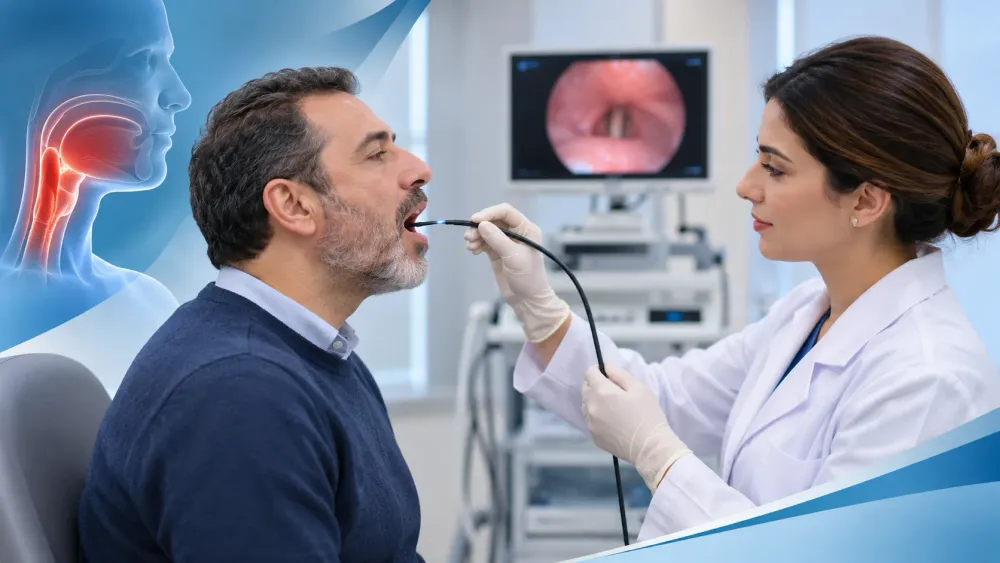
- Clinical examination of oral, pharyngeal, and laryngeal functions.
- Evaluating swallowing efficiency and safety.
- Specialized investigations when needed, such as:
- Flexible Endoscopic Evaluation of Swallowing (FEES).
- Videofluoroscopic Swallowing Study (VFSS).
5. How Are Swallowing Difficulties Treated?
Treatment depends on the underlying cause and nature of the swallowing disorder and may include:
- Swallowing muscle rehabilitation exercises.
- Training to improve swallowing efficiency and coordination.
- Modifying food and liquid consistency.
- Using specific swallowing positions and strategies.
- Treating the underlying medical condition.
Remember: Early diagnosis and appropriate rehabilitation help improve swallowing safety and reduce the risk of choking, pneumonia, and malnutrition.
Do not ignore swallowing difficulties. Specialized assessment is the first step toward appropriate treatment.