
- Nose
- 12 Aug 2026
Do You Need Deviated Septum Surgery and Turbinate Reduction?
Having a deviated nasal septum or enlarged nasal turbinates does not necessarily mean that you need surgery.
The decision depends mainly on your symptoms, the actual cause of nasal obstruction, and the findings of your ENT examination. Understanding what surgery can and cannot improve is also essential before deciding to proceed.
So, when is surgery necessary, and why do some patients continue to experience symptoms even after the procedure?
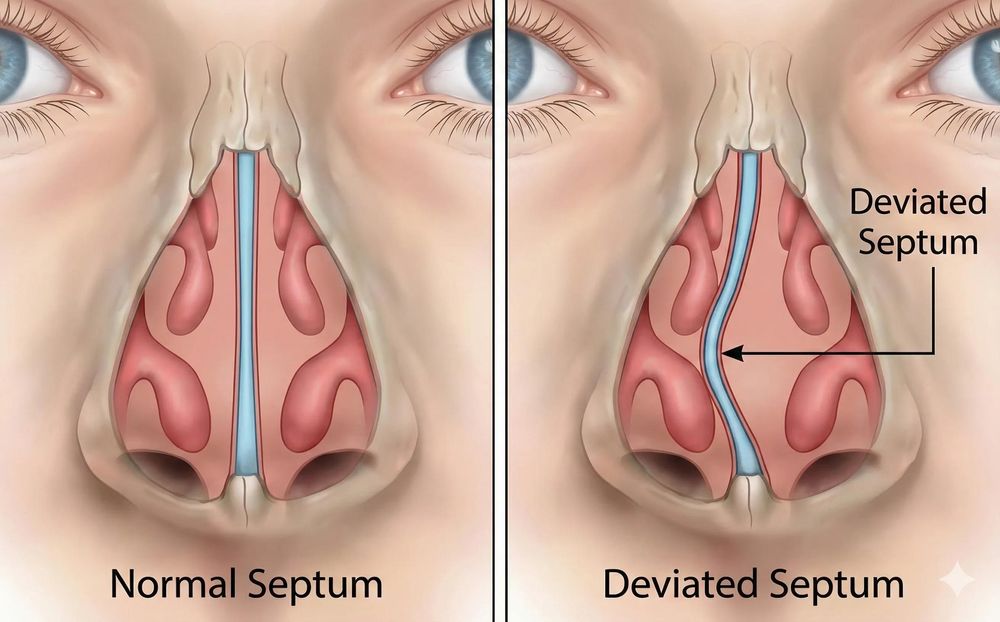
What Is a Deviated Nasal Septum?
The nasal septum is the structure that separates the two sides of the nose. When it is significantly deviated, it may restrict airflow and cause difficulty breathing through the nose.
However, having a deviated septum without significant symptoms does not necessarily require surgery.
What Are Enlarged Nasal Turbinates?
The nasal turbinates are structures located inside the nose that help regulate and condition airflow.
When they become enlarged, they may narrow the nasal airway and contribute to persistent nasal obstruction.
If enlarged turbinates are identified as a significant cause of breathing difficulty, the ENT specialist may recommend treatment to reduce their size.
How Does the Doctor Determine Whether You Need Surgery?
Before deciding on septoplasty and turbinate reduction, it is important to identify the actual cause of your symptoms.
Evaluation may include:
- A detailed medical history and discussion of your symptoms.
- Assessment of the severity and duration of nasal obstruction.
- Examination of the nose.
- Nasal endoscopy when needed.
- Review of investigations such as a CT scan when indicated.
Based on these findings, the ENT specialist can determine the most appropriate treatment plan.
Why Do Some Patients Not Improve After Deviated Septum Surgery?
One of the most common questions patients ask is: Why am I still experiencing symptoms after septoplasty?
There are several possible reasons.
1. The Deviated Septum Was Not the Main Cause of the Symptoms
Some patients may experience symptoms such as:
- Sneezing.
- Runny nose.
- Nasal irritation or burning.
- Other symptoms of allergic rhinitis.
These symptoms may be caused by nasal allergies rather than the deviated septum itself, so they should not be expected to disappear simply because septoplasty has been performed.
This is why identifying the actual cause of the symptoms before surgery is essential.
2. Not Following Postoperative Instructions
Postoperative care is an important part of recovery.
Smoking or not following the recommended nasal cleaning and saline irrigation instructions may contribute to inflammation or adhesions inside the nose, which can cause persistent nasal obstruction.
Does Septoplasty Replace Nasal Sprays and Allergy Medication?
Not necessarily.
A common misconception is that after septoplasty, patients will no longer need nasal sprays or allergy medication.
When indicated, the purpose of septoplasty is to correct the structural obstruction and improve the nasal airway.
However, if the patient also has allergic rhinitis, allergy symptoms may still become active during seasonal changes, colds, or exposure to triggers. Appropriate medical treatment may therefore still be required.
Does Deviated Septum Surgery Treat Allergic Rhinitis?
No. Septoplasty does not treat allergic rhinitis itself.
A patient can have both a deviated septum and allergic rhinitis at the same time. Surgery may address the structural obstruction caused by the septum, while allergic rhinitis requires its own appropriate treatment and follow-up.
This is why patients should understand before surgery which symptoms are expected to improve with the procedure and which symptoms may still require medical treatment.
Does Every Deviated Septum Require Surgery?
No.
A deviated nasal septum or enlarged nasal turbinates without significant symptoms does not require surgery simply because it is present.
The decision to proceed with surgery should be based on the patient's symptoms, their impact on breathing and daily life, and the findings of the medical evaluation.
Frequently Asked Questions
When does a deviated septum require surgery?
Surgery may be considered when a deviated septum is associated with significant nasal obstruction and the ENT evaluation confirms that the structural problem is a major contributor to the patient's symptoms.
Can nasal obstruction return after septoplasty?
Some patients may experience nasal obstruction after surgery for different reasons, including allergies, inflammation, or adhesions inside the nose. Identifying the cause and appropriate postoperative follow-up are therefore important.
Does septoplasty cure nasal allergies?
No. Septoplasty corrects a structural problem in the nasal septum, while allergic rhinitis requires separate medical treatment and follow-up.
Will I still need nasal sprays after septoplasty?
Some patients may still require nasal medications after surgery, particularly if they also have allergic rhinitis. Treatment depends on the individual patient's condition.
Do enlarged nasal turbinates always require surgery?
No. The decision depends on the severity of the symptoms, the cause of turbinate enlargement, response to medical treatment, and the findings of the ENT evaluation.
Related Services
Related Articles
- Can Allergic Rhinitis Cause Persistent Nasal Obstruction?
- Does Your Child Have Allergic Rhinitis or Recurrent Colds?
- Radiofrequency Treatment for Nasal Obstruction: When Is It Used?
Start with the Right Diagnosis
If you experience persistent nasal obstruction or have been diagnosed with a deviated septum or enlarged nasal turbinates, the first step is to identify the actual cause of your symptoms before considering surgery.
At ENT Clinic Egypt, each case is evaluated through clinical examination and, when needed, nasal endoscopy and other investigations to determine the appropriate treatment plan.
📞 Book your appointment: 0248836150
🌐 www.entclinicegypt.com